
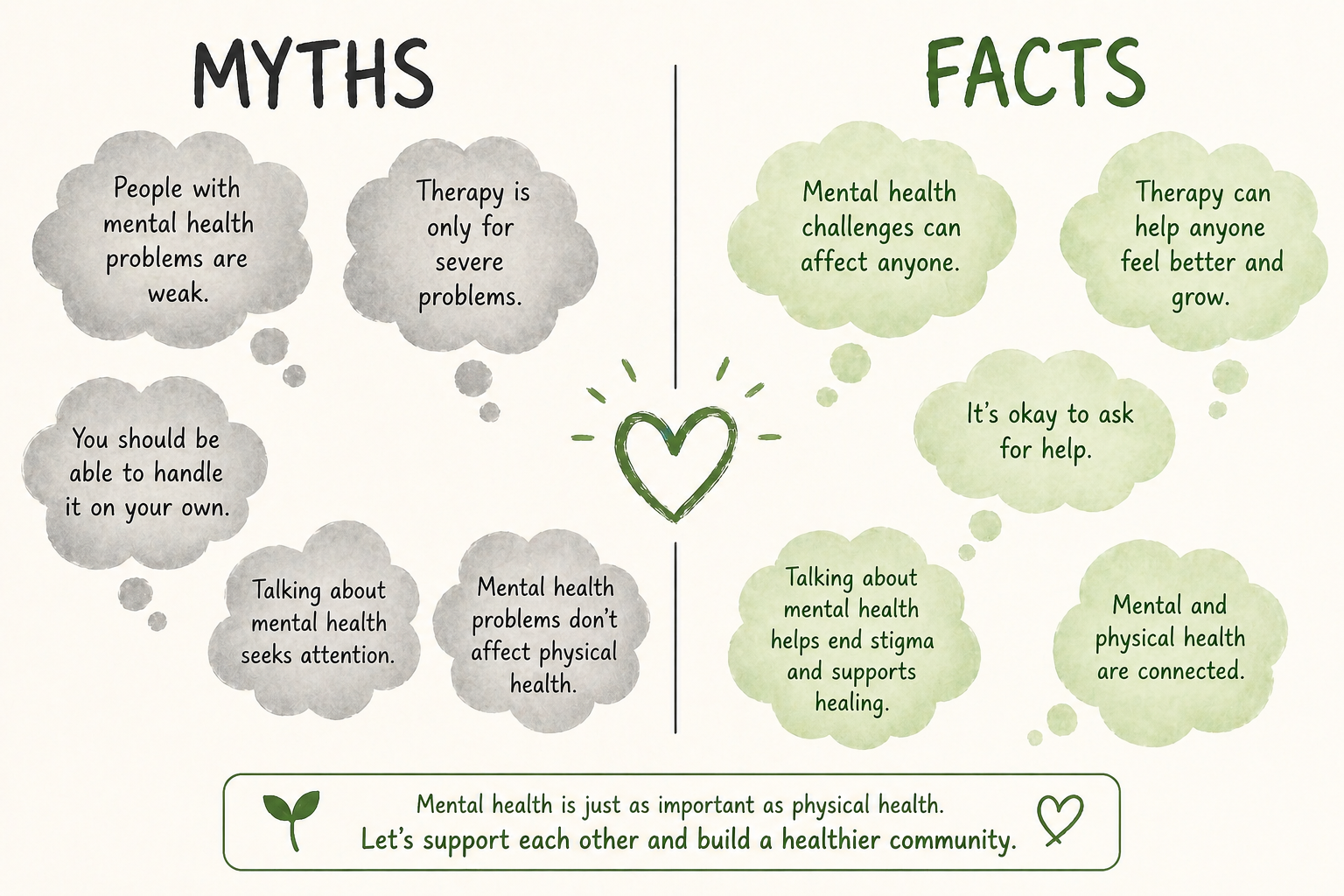
Many people hesitate to seek therapy because of common misconceptions. These myths can make mental health support feel confusing, intimidating, or unnecessary.
The truth is that therapy is a supportive and practical tool that helps people better understand themselves and manage life’s challenges.
Myth 1: Therapy Is Only for Serious Problems
One of the most common beliefs is that therapy is only needed during a crisis. In reality, therapy can be helpful at any stage of life.
People seek therapy for everyday stress, personal growth, relationship challenges, and life transitions. You do not need to wait until things feel overwhelming.
Myth 2: Talking to Friends Is the Same as Therapy
Friends and family provide important support, but therapy offers something different. A therapist provides a neutral, structured, and confidential space focused entirely on your well-being.
Therapy also includes professional tools and techniques that help you better understand patterns and develop healthier ways of coping.
Myth 3: Therapy Means Something Is “Wrong” With You
Seeking therapy does not mean something is wrong. It means you are taking care of your mental health.
Just like people visit a doctor for physical health, therapy is part of maintaining emotional well-being.
Myth 4: Therapy Takes Too Long
Some people avoid therapy because they think it requires a long-term commitment. While some individuals choose ongoing support, others benefit from short-term sessions focused on specific goals.
Therapy can be flexible and adapted to your needs.
Myth 5: It Will Be Uncomfortable or Awkward
It is normal to feel unsure at first. However, therapists are trained to create a safe and supportive environment.
You can move at your own pace, and there is no pressure to share more than you are comfortable with.
A Different Way to Think About Therapy
Therapy is not about fixing something that is broken. It is about understanding yourself better, building resilience, and finding healthier ways to move forward.
- It supports personal growth
- It helps manage stress and emotions
- It improves relationships and communication
Letting go of these myths can make it easier to take the first step toward support.
When to Reach Out
If you feel like therapy may help, our team is here to review your request and guide you through the next steps.
You do not need to have everything figured out. Taking that first step is enough.